
The World's Number 1 Fly Fishing Destination
|
|
|||||||||||||||
The AdamsbyEugene P. Macri Jr.You may use these articles. You can store them. You can read them. You may not change, republish, sell or redistribute these articles in anyway for any monetary gain. You may not add them to your collection and sell them etc. These articles are copyrighted and we will strictly enforce the copyright. © 2017 E. P. Macri Jr.
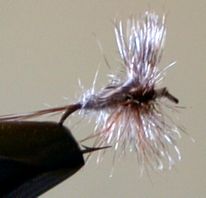
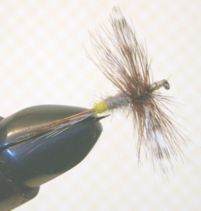
The Adams The Adams is one of the most versatile dry flies ever invented. But most anglers fail to understand the many ways this fly can be used. The Adams in its many sizes and variations can be used as an attractor or searching pattern. It can also be used to match a number of mayflies, and the fly can also be used as a general imitation when a certain shape rather than color is important
It´s kind of strange because an old poacher I knew taught me the same trick years ago. What´s the lesson here? Find fish that haven't been hammered. Find a section of stream depth where the fish will respond (notice this angler didn´t try and take fish from the heavy water or deep holes with this technique) to the stimuli and then give them something that they will take. You might just call those the three basic laws of fly fishing and the Adams is the finishing touch
Adams Fly Tying Table
| |||||||||||||||
Home > Fly Fishing: Dry Flies: The Adams
|
 few of the patterns. Make the egg sacs sulfur and orange colored
 One day on the Yellow Breeches I saw a fellow do just that. It was in the spring
and the stream was fished hard. While most anglers took a break for lunch, this fellow carefully fished the
opposite bank in the shallows. He popped a number 14 Adams into the slicks, backwaters and pockets. I watched
him catch over 30 trout in 2 hours. He landed two fish over 20 inches. Remember, the water was cold, and no
fish had been rising that day. But earlier that week the fish had been coming up for a variety of caddisflies.
Did the trout have the imprint? Seems so to me!
One day on the Yellow Breeches I saw a fellow do just that. It was in the spring
and the stream was fished hard. While most anglers took a break for lunch, this fellow carefully fished the
opposite bank in the shallows. He popped a number 14 Adams into the slicks, backwaters and pockets. I watched
him catch over 30 trout in 2 hours. He landed two fish over 20 inches. Remember, the water was cold, and no
fish had been rising that day. But earlier that week the fish had been coming up for a variety of caddisflies.
Did the trout have the imprint? Seems so to me!Updated!
Through October 2018
Limestone Stream Report and Pod
Casts
Just Click To Get The Latest Info
Note: You Must Have Latest Adobe Flash Player for the Podcasts.
Falling Spring Run
Letort Spring Run
==============
Yellow Breeches
Big Spring
Green Spring
=============
Eastern USA Freestone Stream Report
All Money Goes For Stream Research and Pro Bono Work
Domain Names for Sale
www.webflyshop.com
www.esportswoman.com
www.flyfisherman.co
www.flyfishinginfo.com
www.flyfishinfo.com
www.piratescoast.com
www.piratesreef.com
www.southpacificbay.com
www.fishhog.com
©2016 E.P. Macri Jr. All Rights Reserved